
Almost everyone experiences a toothache or tooth sensitivity at some point in their lives. While mild discomfort may come and go, persistent or severe pain is often your body’s way of saying something isn’t right. Ignoring it might allow a small dental issue to turn into a bigger problem later.
At Saranya Dental, we understand how uncomfortable and worrying dental pain can be. Knowing what causes toothaches and sensitivity — and what to do when they strike — can help you take the right steps toward relief and recovery.
Understanding Toothache and Sensitivity
A toothache is pain felt in or around a tooth. It can range from a dull ache to sharp, throbbing pain that affects your ability to eat, sleep, or concentrate.
Tooth sensitivity, on the other hand, refers to a short, sharp pain triggered by hot, cold, sweet, or acidic foods and drinks. While it’s often less severe than a toothache, it can still signal an underlying issue.
Both conditions are symptoms — not diseases themselves — and the causes can vary widely.
Common Causes of Toothache
- Tooth Decay (Cavities): The most common culprit. When bacteria in plaque produce acids, they erode the enamel and create small holes (cavities). As decay progresses deeper, it can irritate or infect the tooth’s nerve, causing pain.
- Gum Disease: Inflamed gums due to plaque buildup can pull away from the teeth, exposing roots and causing dull, persistent pain or tenderness.
- Infection or Abscess: If bacteria reach the inner pulp of your tooth, it can cause a painful infection or abscess. This often leads to swelling, severe pain, and sometimes fever.
- Cracked or Damaged Tooth: Even a tiny fracture can expose the inner layers of your tooth, leading to sharp pain, especially when chewing or exposed to temperature changes.
- Impacted Wisdom Teeth: When wisdom teeth don’t have enough room to emerge, they can push against neighboring teeth or become infected, causing jaw and tooth pain.
- Sinus Infection: Interestingly, sinus pressure can sometimes mimic tooth pain, especially in the upper back teeth.
Common Causes of Tooth Sensitivity
- Worn Enamel: Over time, aggressive brushing, acidic foods, or grinding your teeth (bruxism) can wear down enamel, exposing the dentin beneath.
- Receding Gums: Gum recession exposes the root surfaces of teeth, which are not protected by enamel and are more sensitive to temperature changes.
- Recent Dental Work: Sensitivity after fillings, cleanings, or whitening is common but should improve within a few days.
- Tooth Whitening Products: Overuse of whitening toothpastes or strips can sometimes cause temporary sensitivity.
What You Can Do at Home
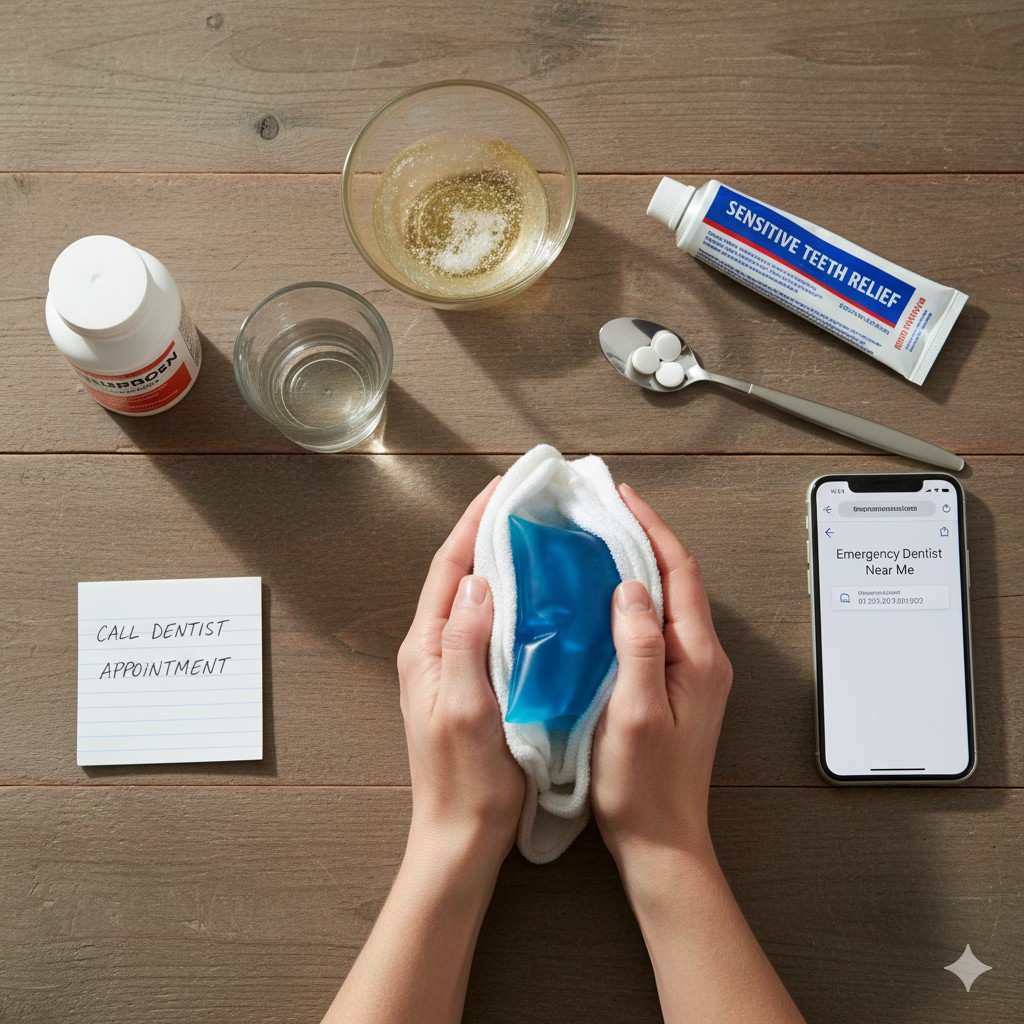
While a dentist should always diagnose the cause of persistent pain, there are some steps you can take to ease discomfort until your appointment:
- Rinse with Warm Salt Water: Mix half a teaspoon of salt in a cup of warm water and rinse your mouth gently. This can reduce inflammation and clean the area.
- Use Over-the-Counter Pain Relief: Pain relievers like ibuprofen or paracetamol can temporarily reduce discomfort, but they don’t treat the cause.
- Avoid Extreme Temperatures: Stay away from very hot, cold, or sweet foods if they trigger pain.
- Apply a Cold Compress: If there’s swelling, apply a cold pack on your cheek for 10–15 minutes at a time.
- Maintain Gentle Oral Hygiene: Brush and floss carefully to keep the area clean, but avoid aggressive scrubbing which can worsen sensitivity.
- Use Desensitizing Toothpaste: Toothpastes like Sensodyne® or Colgate Sensitive Pro-Relief® can help block pain signals from reaching the nerve. Use daily for best results.
When to See a Dentist
You should schedule an appointment with Saranya Dental as soon as possible if you experience any of the following:
- Tooth pain that lasts longer than two days
- Severe pain or swelling
- Fever or a bad taste in your mouth (possible infection)
- Sharp pain when chewing or biting
- Gum swelling or bleeding
- Sensitivity that doesn’t improve after two weeks of using a desensitizing toothpaste
Delaying treatment could allow decay or infection to worsen, leading to more complicated — and costly — treatments later.
How Saranya Dental Can Help
When you visit Saranya Dental, our team will start by identifying the root cause of your pain. We may perform a visual exam, take digital X-rays, and ask about your symptoms.
Depending on the diagnosis, treatment may include:
- Filling or Crown: To repair decayed or damaged teeth.
- Root Canal Treatment: To remove infection from the tooth’s pulp and save the tooth.
- Deep Cleaning: For gum disease or recession.
- Desensitizing or Fluoride Treatments: To strengthen enamel and reduce sensitivity.
- Tooth Extraction or Wisdom Tooth Removal: For severely damaged or impacted teeth.
Our goal is to relieve your pain quickly while protecting your long-term oral health.
Preventing Future Toothaches and Sensitivity
- Brush twice daily with fluoride toothpaste and a soft-bristled brush.
- Floss once a day to remove plaque between teeth.
- Limit sugary and acidic foods.
- Wear a nightguard if you grind your teeth.
- Visit Saranya Dental every six months for check-ups and cleanings.
The Takeaway
A toothache or sensitivity isn’t something you should ignore. These symptoms are signals that your teeth or gums need attention. The sooner you address them, the easier and more comfortable treatment will be.
At Saranya Dental, our caring team is here to provide gentle, effective relief — and to help you smile comfortably again.
If you’re experiencing tooth pain or sensitivity, don’t wait. Schedule your appointment with Saranya Dental today and get the expert care you deserve.