
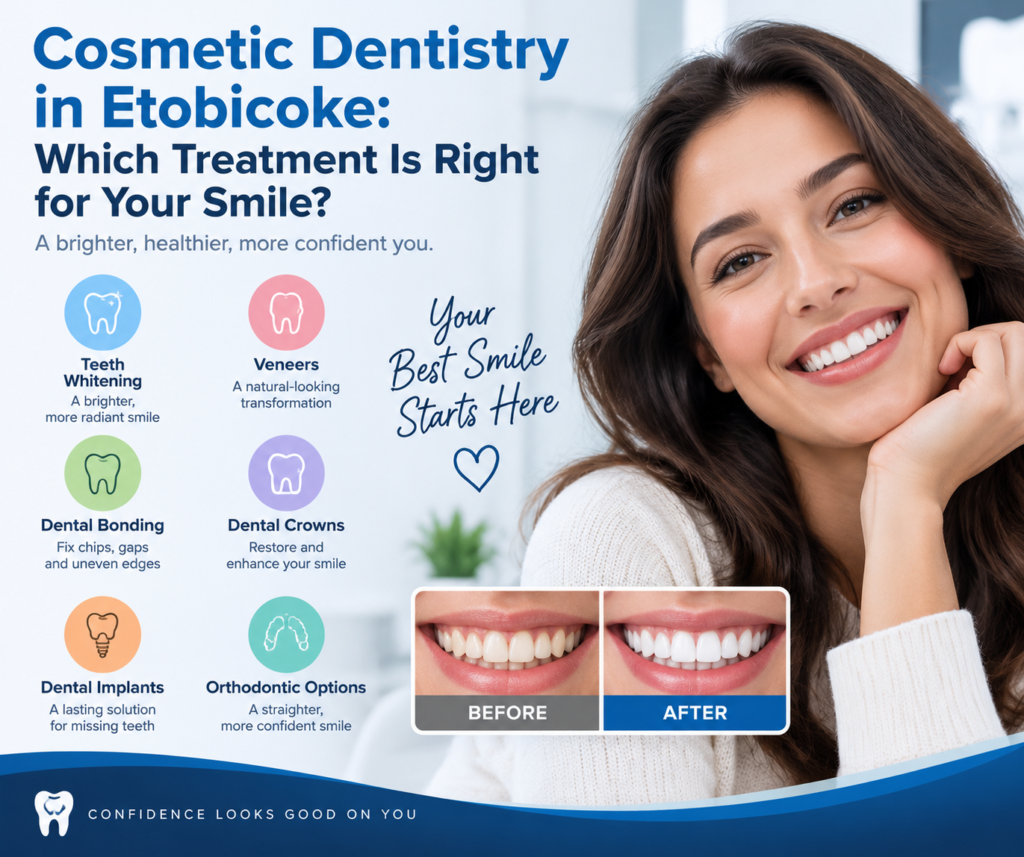
A smile can influence how you feel when speaking, laughing, meeting new people, or appearing in photographs. If staining, chips, uneven teeth, gaps, or other concerns make you less comfortable with your smile, cosmetic dental treatment may provide options worth considering. The right approach depends on what you would like to change, the condition of your teeth and gums, and the type of result you hope to achieve.
There is no single cosmetic procedure that works best for everyone. Some people want a subtle improvement in tooth colour, while others may need to address several concerns at the same time. If you are considering cosmetic dentistry in Etobicoke, understanding the available treatments can help you have a more productive conversation with your dentist and make a decision based on your individual needs.
What Is Cosmetic Dentistry?
Cosmetic dentistry includes dental treatments that can improve the appearance of your teeth and smile. Depending on the procedure, treatment may address concerns related to tooth colour, shape, size, spacing, alignment, or visible damage. Some procedures are mainly cosmetic, while others can provide both aesthetic and restorative benefits.
The first step should be an assessment of your oral health. Healthy teeth and gums provide a better foundation for cosmetic treatment, so concerns such as active decay or gum problems may need attention first. Your dentist can examine your smile, discuss what you would like to change, and explain which options are appropriate for your situation.
Professional Teeth Whitening for Stained or Discoloured Teeth
Tooth colour is one of the most common reasons people consider cosmetic dental care. Teeth can gradually become darker or stained because of foods, beverages, tobacco use, ageing, and other factors. Even with regular brushing and professional cleaning, some discolouration may remain.
Professional teeth whitening may be an option for patients who want a brighter smile without changing the natural shape of their teeth. Your dentist can assess the type of staining you have and determine whether whitening is likely to provide the result you want. It is important to remember that existing fillings, crowns, and other restorations do not respond to whitening in the same way as natural tooth enamel.
Who May Consider Teeth Whitening?
Whitening may suit someone who is generally satisfied with the size, position, and shape of their teeth but would like to improve their colour. It can be a relatively straightforward choice when staining is the main concern. However, the results can vary depending on the cause and depth of the discolouration.
A dental assessment is useful before beginning treatment, particularly if you experience sensitivity or have existing dental work. Your dentist can help you understand what result may be realistic and how to maintain it afterward.
Dental Veneers for Multiple Cosmetic Concerns
When you want to change more than tooth colour, veneers may be another option to discuss. Veneers are thin coverings placed over the visible surface of selected teeth. They can be used in appropriate cases to change the appearance of teeth that are discoloured, chipped, irregularly shaped, or affected by certain spacing concerns.
One advantage of veneers is their ability to address several cosmetic issues at the same time. For example, someone concerned about both tooth shape and colour may find that whitening alone does not address everything they want to change. Veneers may offer a different approach, although they require careful planning and are not appropriate for every patient.
Are Veneers Right for Your Smile?
The answer depends on your teeth, gums, bite, expectations, and the changes you want to make. Your dentist will need to determine whether your teeth can support veneers and whether another treatment could provide a more suitable result. Since veneers involve a longer-term change to the teeth, it is important to understand the procedure before making a decision.
You should also discuss maintenance and future replacement. Like other dental restorations, veneers are not expected to last forever. Good oral hygiene and regular dental visits remain important after treatment.
Dental Bonding for Small Chips and Shape Concerns
Not every cosmetic concern requires extensive treatment. Dental bonding may be considered for smaller changes involving chips, minor gaps, irregular edges, or tooth shape. During bonding, tooth-coloured material is applied and shaped to improve the appearance of the affected tooth.
Bonding can be useful when the desired change is relatively limited. The suitability of the procedure depends on where the tooth is located, the amount of change required, and the forces placed on that tooth when you bite and chew. A dentist can determine whether bonding is appropriate or whether another restoration would provide a more suitable solution.
Bonding or Veneers: What Is the Difference?
Both treatments can improve the visible surface of a tooth, but they differ in materials, planning, durability, and how they are placed. Bonding may be suitable for certain smaller corrections, while veneers may be considered when a more extensive change in appearance is desired. Neither option is automatically better for every patient.
Your decision should be based on the condition of your teeth as well as your cosmetic goals. Discussing the advantages, limitations, expected maintenance, and costs of each treatment can help you make a more informed choice.
Dental Crowns When a Tooth Needs More Than a Cosmetic Change
Sometimes a tooth has an appearance concern because it is also significantly damaged or weakened. In these situations, a dental crown may be considered rather than a treatment focused only on the front surface of the tooth. A crown covers the tooth and can restore its shape and appearance while also providing protection.
Crowns may be recommended for teeth with extensive damage, large restorations, or other structural concerns. Because healthy tooth structure needs to be considered carefully, a crown should be recommended based on clinical need rather than appearance alone. Your dentist can explain whether a crown, veneer, bonding, or another option makes sense for the tooth being treated.
Replacing Missing Teeth Can Also Improve Your Smile
Cosmetic concerns do not always involve teeth that are stained or chipped. A missing tooth can create a visible gap and may also affect chewing or the way neighbouring teeth function. In this situation, improving the smile may involve restorative treatment rather than a procedure that is purely cosmetic.
Depending on your oral health and the location of the missing tooth, options may include a dental implant, bridge, or removable tooth replacement. Each choice has different requirements and considerations. A dental examination can help determine which options are suitable and how they may affect both appearance and everyday function.
What About Uneven or Misaligned Teeth?
If the main concern is the position of your teeth, covering them is not always the most suitable solution. Orthodontic treatment may be worth considering when teeth are crowded, rotated, or spaced in a way that affects the overall appearance of the smile. Moving the teeth can sometimes address the underlying concern rather than changing their visible surfaces.
The appropriate treatment depends on how much movement is required and how your teeth fit together. Some patients may benefit from orthodontic treatment alone, while others may consider additional cosmetic care after alignment has been improved. Planning the order of treatment carefully can help avoid unnecessary dental work.
Can You Combine Cosmetic Dental Treatments?
Some patients have more than one concern about their smile, so a combination of treatments may be appropriate. For example, one person may want to improve tooth alignment before considering whitening, while another may need restorative treatment before addressing cosmetic concerns. The sequence matters because one procedure can affect the appearance or planning of another.
A coordinated plan allows your dentist to consider the final result before treatment begins. This can be particularly important if you are thinking about whitening along with crowns, veneers, or bonding. Since restorations do not whiten like natural teeth, planning tooth colour at the right stage can help create a more consistent result.
How to Choose the Right Cosmetic Dental Treatment
The treatment that sounds most appealing is not necessarily the one that best suits your teeth. Before making a decision, consider exactly what bothers you about your smile and what type of change would make a meaningful difference. Being specific about your goals can help your dentist recommend options rather than simply choosing a procedure because it is popular.
Your oral health also needs to guide the decision. A cosmetic treatment should not hide an untreated dental problem or compromise healthy tooth structure unnecessarily. The goal should be to find a reasonable balance between the appearance you want and the long-term health of your teeth.
Questions to Ask During a Cosmetic Dentistry Consultation
A consultation gives you an opportunity to understand what is possible before committing to treatment. Explain what you like and dislike about your smile, but remain open to options you may not have considered. Your dentist may identify a simpler approach or explain why a particular treatment is not suitable for your teeth.
Useful questions include how the procedure works, what changes can realistically be expected, whether any tooth structure needs to be altered, and what maintenance may be required afterward. You should also understand the expected costs and whether future replacement or additional care may be needed. Clear answers make it easier to compare your options with realistic expectations.
Think About Long-Term Care, Not Just the Initial Result
Cosmetic treatment does not replace everyday oral care. Brushing, cleaning between your teeth, attending recommended dental visits, and addressing new concerns promptly remain important after any cosmetic procedure. The way you care for your teeth can also affect how long the appearance of your treatment is maintained.
Certain habits may influence cosmetic dental work as well. Your dentist may provide specific care instructions based on the procedure you receive. Following those recommendations can help protect both your natural teeth and any restorations involved in your smile.
Avoid Choosing Treatment Based Only on Trends
Social media can make certain smile treatments appear suitable for everyone, but dental care needs to be individualized. A result that looks attractive on another person may not suit your facial features, tooth proportions, oral health, or personal preferences. Cosmetic dentistry should enhance your own smile rather than attempt to copy someone else’s.
Natural-looking results often come from careful planning rather than making every tooth look identical. Discuss the amount of change you want and whether you prefer a subtle or more noticeable result. A clear conversation about expectations can help guide treatment choices that feel appropriate for you.
Choose a Cosmetic Treatment That Fits Your Smile
Improving your smile starts with understanding what you want to change and why. Whitening may be enough for someone concerned mainly about tooth colour, while bonding, veneers, crowns, orthodontic care, or tooth replacement may be more appropriate for other concerns. A professional assessment can help narrow the options and ensure that cosmetic goals are considered alongside the health of your teeth and gums.
Saranya Dental can help you understand the treatments that may be appropriate for your smile. Schedule a consultation to discuss your concerns, explore suitable options, and develop a treatment plan based on your individual needs.
Frequently Asked Questions
What is the best cosmetic dental treatment?
There is no single treatment that is best for everyone. The right option depends on your teeth, oral health, and what you would like to improve.
Can cosmetic dentistry fix stained teeth?
Yes, several treatments may improve the appearance of stained teeth. Depending on the type of discolouration, options may include professional whitening or veneers.
Can a chipped tooth be repaired for cosmetic reasons?
A chipped tooth may be improved with bonding, a veneer, a crown, or another treatment. The appropriate choice depends on the size of the chip and the condition of the tooth.
How long does cosmetic dental treatment last?
The lifespan varies according to the treatment, materials, oral habits, and daily care. Regular dental visits can help monitor both natural teeth and restorations.
Is cosmetic dentistry only about appearance?
Not always. Some treatments can improve appearance while also restoring damaged or missing teeth. Your dentist can explain whether a procedure offers cosmetic, restorative, or combined benefits.
Do I need healthy teeth before cosmetic treatment?
Existing dental problems may need to be addressed before cosmetic treatment begins. A dental examination can determine whether your teeth and gums are ready for the procedure you are considering.
How do I choose a cosmetic dentist in Etobicoke?
Look for clear communication, careful treatment planning, and options suited to your individual needs. Your dentist should explain realistic results, alternatives, costs, and ongoing care before treatment begins.