
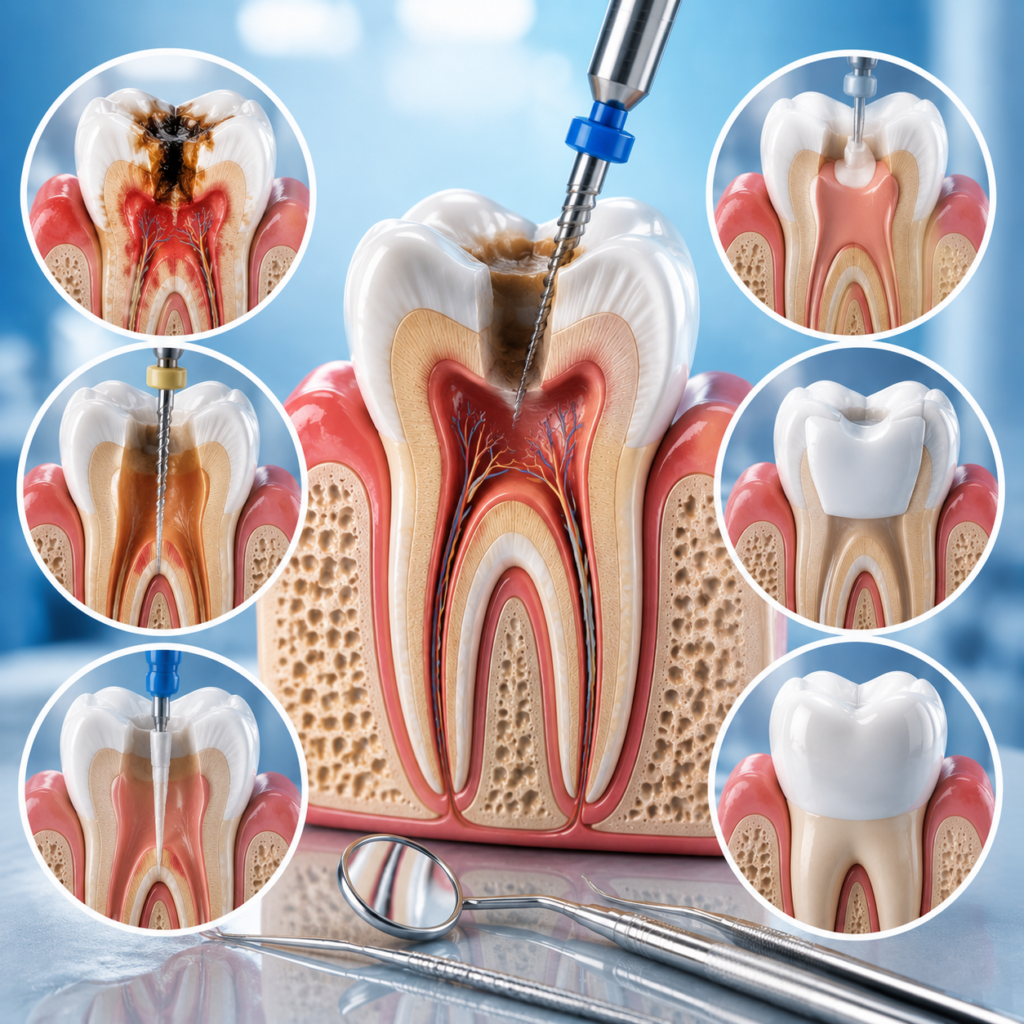
Tooth pain can be one of the most uncomfortable and disruptive experiences, especially when it becomes persistent or severe. In many cases, this type of pain is a sign of infection deep within the tooth, and one of the most effective ways to treat it is through root canal therapy. While the term “root canal” often causes anxiety for patients, modern dentistry has made this procedure safe, efficient, and relatively painless.
In this comprehensive guide, we’ll walk you through everything you need to know about root canal treatment—from what it is and why it’s needed to the procedure, recovery, and benefits.
What Is Root Canal Treatment?
Root canal treatment is a dental procedure used to remove infected or damaged pulp from inside a tooth. The pulp contains nerves, blood vessels, and connective tissue, and when it becomes infected, it can lead to severe pain and complications.
During a root canal, the infected pulp is carefully removed, the inside of the tooth is cleaned and disinfected, and the space is sealed to prevent further infection. In most cases, a dental crown is placed on the treated tooth to restore its strength and function.
Why Is a Root Canal Needed?
A root canal becomes necessary when the pulp inside your tooth becomes inflamed or infected. This can happen due to several reasons:
- Deep cavities that reach the inner layers of the tooth
- Cracks or chips that expose the pulp to bacteria
- Repeated dental procedures on the same tooth
- Trauma or injury to the tooth
- Advanced gum disease
If left untreated, the infection can spread beyond the tooth, leading to abscesses, bone loss, and even systemic health issues.
Common Signs You May Need a Root Canal
Recognizing the symptoms early can help you seek treatment before the condition worsens. Some common signs include:
- Persistent or severe tooth pain
- Sensitivity to hot or cold that lingers
- Swollen or tender gums
- A small pimple-like bump on the gums (abscess)
- Tooth discoloration
- Pain when chewing or applying pressure
It’s important to note that sometimes there may be no obvious symptoms, which is why regular dental check-ups are essential.
The Root Canal Procedure: Step-by-Step
Understanding the procedure can help ease anxiety and prepare you for what to expect.
1. Examination and Diagnosis
Your dentist will examine the affected tooth and take X-rays to determine the extent of the infection.
2. Local Anesthesia
The area around the tooth is numbed to ensure you are comfortable throughout the procedure.
3. Accessing the Pulp
A small opening is made in the tooth to access the infected pulp.
4. Cleaning and Shaping
The infected tissue is removed, and the root canals are cleaned, shaped, and disinfected.
5. Filling the Canals
The cleaned canals are filled with a biocompatible material to seal them.
6. Restoration
A crown or filling is placed on the tooth to restore its strength, appearance, and function.
The entire procedure is typically completed in one or two visits, depending on the complexity of the case.
Does a Root Canal Hurt?
One of the biggest misconceptions about root canal treatment is that it is painful. In reality, modern techniques and anesthesia make the procedure no more uncomfortable than getting a regular filling.
In fact, a root canal is designed to relieve pain—not cause it. Most patients report feeling significant relief after the procedure.
Recovery After a Root Canal
After the treatment, it’s normal to experience mild discomfort or sensitivity for a few days. This can usually be managed with over-the-counter pain medication.
Here are some tips for a smooth recovery:
- Avoid chewing on the treated tooth until it is fully restored
- Maintain good oral hygiene
- Attend follow-up appointments
- Avoid hard or sticky foods temporarily
Most patients can return to their normal activities the next day.
Benefits of Root Canal Treatment
Root canal therapy offers several important benefits:
- Pain Relief: Eliminates the source of infection and discomfort
- Tooth Preservation: Saves your natural tooth from extraction
- Improved Oral Health: Prevents the spread of infection
- Restored Function: Allows normal chewing and speaking
- Aesthetic Results: With a crown, the tooth looks natural
Saving your natural tooth is always the preferred option whenever possible.
Root Canal vs Tooth Extraction
When faced with a severely damaged tooth, patients often wonder whether to choose a root canal or extraction.
While extraction may seem like a quicker solution, it can lead to additional complications such as shifting teeth, bone loss, and the need for replacement options like implants or bridges.
A root canal, on the other hand, preserves your natural tooth and maintains your oral structure. In most cases, it is the better long-term solution.
How Long Does a Root Canal Take?
The duration of a root canal depends on the complexity of the case and the tooth being treated. On average:
- Front teeth: 60–90 minutes
- Molars: 90–120 minutes
- Complex cases: May require multiple visits
Your dentist will provide a more accurate estimate based on your specific condition.
How to Prevent the Need for a Root Canal
While not all cases are preventable, good oral hygiene can significantly reduce your risk:
- Brush your teeth twice daily
- Floss regularly
- Avoid excessive sugar consumption
- Wear a mouthguard during sports
- Visit your dentist regularly for check-ups and cleanings
Early detection of dental issues can prevent them from progressing into more serious conditions.
Myths About Root Canal Treatment
There are several myths surrounding root canals that can create unnecessary fear:
- Myth: Root canals are extremely painful
Fact: Modern procedures are comfortable and effective - Myth: It’s better to extract the tooth
Fact: Saving your natural tooth is usually the best option - Myth: Root canals cause illness
Fact: There is no scientific evidence supporting this claim
Understanding the facts can help you make informed decisions about your dental health.
When Should You See a Dentist?
If you are experiencing any symptoms of a tooth infection or persistent pain, it’s important to seek professional care as soon as possible. Delaying treatment can lead to complications and more extensive procedures.
Even if the pain goes away, the infection may still be present and require treatment.
Final Thoughts
Root canal treatment is a highly effective and routine procedure that can save your natural tooth and relieve pain caused by infection. With advancements in dental technology, the process is now more comfortable and efficient than ever before.
If you’re experiencing tooth pain or suspect you may need a root canal, the experienced team at Saranya Dental is here to help. Don’t wait for the problem to worsen—book your appointment today and take the first step toward a healthier, pain-free smile.